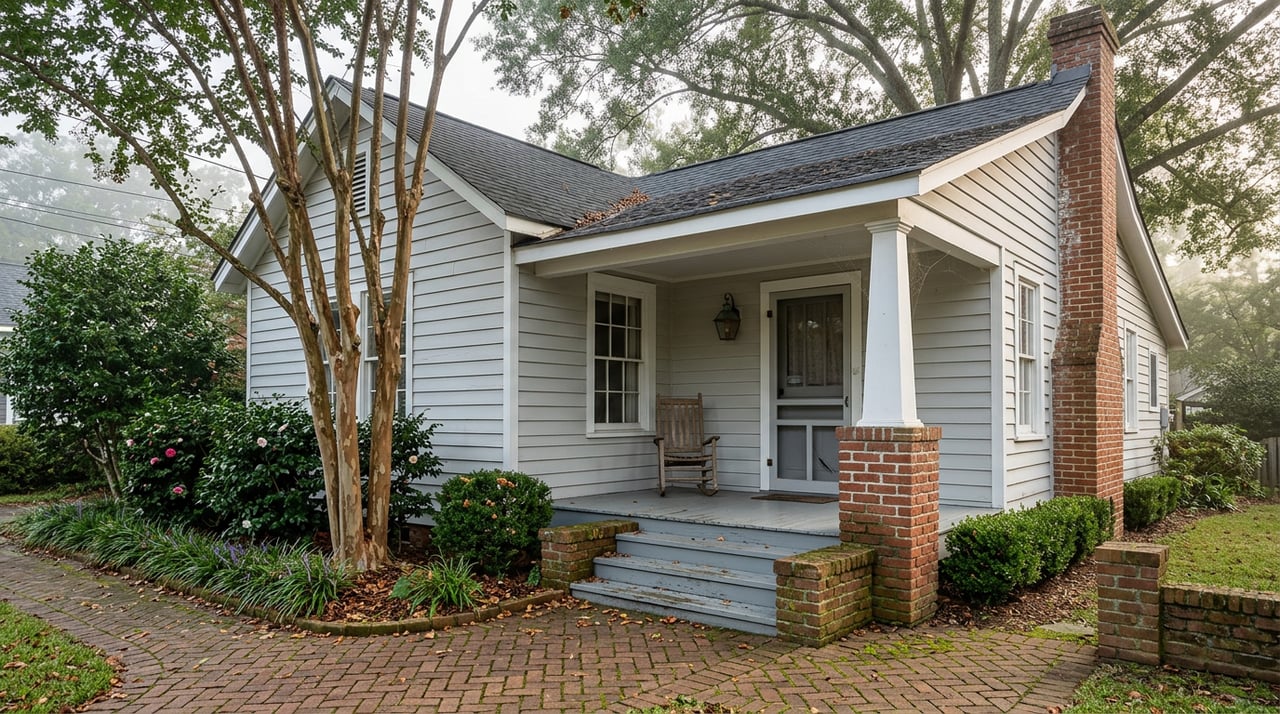
Ask a seller who owns a cottage inside Old Town Pinehurst what a new deck railing or a repainted shutter costs, and most will give you a number in dollars. Ask how long it takes to get permission to install it, and the number that actually matters changes. It isn't measured in dollars. It's measured in weeks.
That gap, between what a renovation costs and how long it takes to get approved, is the detail that catches sellers and buyers off guard inside Pinehurst's Local Historic District. It has almost nothing to do with money and everything to do with a calendar most people don't think to check until they're already behind.
What Actually Falls Under Review
The village's development ordinance is specific about what triggers a Certificate of Appropriateness, and the list is longer than most homeowners expect. Before any exterior alteration in the historic district that requires commission review, an application has to go to the Historic Preservation Commission, and the ordinance names masonry walls, fences, light fixtures, steps, pavement, above-ground utility structures, and signage as covered elements, all before a development permit can even be issued, according to Section 8.3.1.3 of the Pinehurst Development Ordinance.
That means the review isn't reserved for additions or new construction.
Why the Calendar Is the Real Cost
Here is the part that matters most if you're planning to sell. The Historic Preservation Commission meets monthly, and a straightforward Certificate of Appropriateness application typically takes four to six weeks from submission to approval, longer if the project is more involved, according to Raynor Shine Construction.
A seller who plans to repaint trim or replace deck boards two weeks before listing photos go up isn't working against a budget. They're working against a meeting schedule that doesn't bend for a closing date. If the goal is fresh exterior details before the home hits the market, that timeline needs to start closer to two months out, not two weeks.
What the Commission's Own Records Show
The review process isn't theoretical. Public hearing records from the commission document real cases with real addresses, and they show a body that applies the "congruous" standard case by case rather than rubber-stamping every request. A 2021 hearing record includes several instructive examples:
- A porch expansion at the Ryder Cup Lounge, 80 Carolina Vista, needed a Major Certificate of Appropriateness before the work could proceed, the same review path a private homeowner would use.
- A rear door swap to a three-panel French door at a home on 10 Village Green Road, a change most homeowners would consider minor, still required a public hearing.
- A proposed tree removal at 85 McIntyre Road wasn't strictly consistent with the written guidelines, but the commission approved it anyway as compatible with the surrounding lots. Commission members noted afterward that future safety-based justifications for removing a tree would need stronger supporting evidence.
That last case is worth sitting with. It shows the commission has room to approve work that doesn't perfectly match the guidelines on paper, provided the reasoning is documented and presented at a hearing. In the cases described here, work from a single tree to a clubhouse porch went through a public process. The Sandhills Sentinel reports that other changes may be approved administratively, and routine maintenance may not require review at all.
Old Town Versus HOA-Governed Neighborhoods
Buyers comparing an Old Town cottage against a home in a gated golf community are often comparing two entirely different review systems without realizing it. The Historic Preservation Commission only governs properties inside the mapped historic district. Homes in HOA-governed communities like the Country Club of North Carolina answer to a neighborhood Architectural Review Committee instead, a separate body with its own process and its own expectations, as the same contractor guide notes when it points out that homeowners in HOA-governed neighborhoods face ARC review in addition to any village permitting.
| Old Town Historic District | HOA-Governed Neighborhoods (e.g., CCNC) | |
|---|---|---|
| Reviewing body | Historic Preservation Commission, with some staff-level approvals | Neighborhood Architectural Review Committee |
| Meeting cadence | Monthly | Set by the individual HOA |
| Typical scope | Masonry, fences, lighting, steps, paint, signage, additions | Exterior changes per neighborhood covenants |
| Material expectations | Traditional materials generally preferred over composites | Often more flexible, subject to covenant language |
The two systems don't overlap by default, but they can. A property can sit inside both an HOA and the village's historic district boundary, which means a single deck project might need approval from two different committees before a contractor ever picks up a hammer.
What This Means Before You List or Make an Offer
For a seller, the sequence matters more than the budget. Confirm with the Village Planning Department whether your address falls inside the Local Historic District before scheduling any exterior prep work. Ask staff directly which changes count as routine maintenance and skip review entirely, since the guidelines maintain a list of staff-level approvals separate from full commission hearings. Build in at least six weeks for visible work that requires commission review, and allow longer for a porch, addition, or structural change. Choose materials that match district expectations the first time.
For a buyer, the questions shift. Ask whether any exterior work on the home was done without going through the Certificate of Appropriateness process. Ask which review body actually governs the property, the Historic Preservation Commission, a neighborhood ARC, or both. And if a renovation is part of the plan after closing, treat the approval calendar as part of the timeline, not an afterthought once the moving truck is unloaded.
A Few Common Questions
Does the historic district cover the whole village, or just certain streets? The village maintains an official boundary map through the Planning Department, generally tracing the original village core platted in the 1890s. The most reliable way to confirm whether a specific address falls inside it is to check directly with Village of Pinehurst Planning staff.
Does every exterior change require a hearing? Not necessarily. Village guidelines distinguish between changes that need full commission review, changes staff can approve administratively, and routine maintenance that doesn't require review at all. The distinction is worth confirming before assuming a project needs a hearing.
Does this apply to interior renovations? No. The ordinance is written around exterior features specifically, from masonry to fencing to signage. Interior work generally falls outside the commission's scope.
Buying or selling a home with this much history attached is a different kind of process, and the calendar matters as much as the price. If you're weighing a cottage in Old Town Pinehurst against a home in one of the county's gated communities, or you're prepping a historic property for market and want a realistic timeline before you touch a paintbrush, Rose A Ward has walked this exact process with sellers and buyers across Moore County. Let's Connect and talk through what your specific address actually requires.
This article is general information, not legal, tax or financial advice. Consult a qualified professional about your situation.